Slide 1
Kaitiakitanga
Image is not available

Learn about customary management areas within the Bay. In the Te Puna mātaitai no commercial fishing is allowed, and no taking of mussels.

Te Puna mātaitai

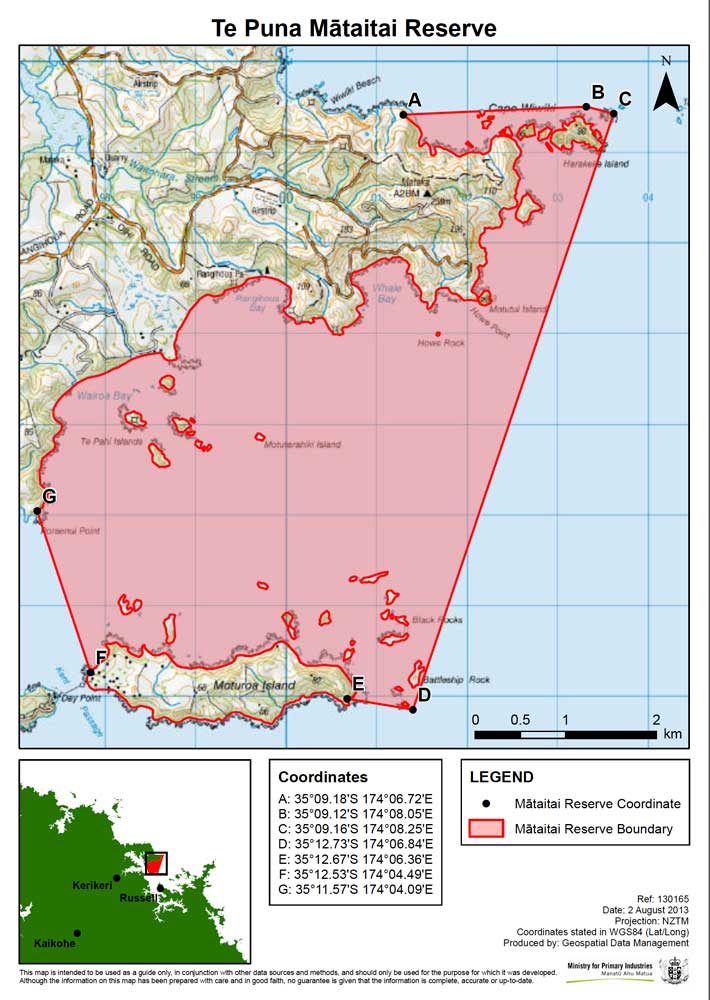
te puna mataitai 2Ngā Hapū o Taiamai ki Te Marangai have established the 20 sq km Te Puna mātaitai within their rohe moana area in the western Bay of Islands (area chart below).

  • Tangata whenua are authorised by the Minister of Fisheries under s.23 of the Kaimoana Customary Fishing Regulations 1998 to manage and control the non-commercial harvest of seafood through a local committee.
  • Mātaitai reserves are permanent, though the bylaws can change over time.
  • No commercial fishing is allowed within the area (unless recommended by the committee)
  • The kaitiaki can set bylaws to manage the fishing in the area.
  • Both Maori and non-Maori may fish in mātaitai reserves.

Download the Te Puna mātaitai boundaries boundaries here 

Mātaitai reserves are created in areas of traditional importance to Maori for customary food gathering.
 

The Minister of Fisheries has approved a bylaw that prohibits the take or possession of three types of mussel: green lipped, black, and blue mussels from within the Te Puna Mātaitai area - effective 23rd March 2020 until further notice.

This decision follows consultation after tangata tiaki/kaitiaki saw a decline in mussel populations in the last few years. This new bylaw aims to help restore the mussel beds and ensure the sustainability of the sacred kūtai population.

mussel sign new


rahui boundaries


As a result of the Treaty of Waitangi (Fisheries Claims) Settlement Act 1992, the Crown agreed amongst other things, to introduce legislation empowering the making of regulations recognising and providing for customary food gathering and the special relationship between tangata whenua and places of importance for customary food gathering (including tauranga ika (fisheries habitat) and mahinga mataitai (traditional fishing and harvesting locations) to the extent that such food gathering is not commercial in any way nor involves commercial gain or trade.

In accordance with the Crowns obligations under the deed to introduce legislation, the Treaty of Waitangi (Fisheries Claims) Settlement Bill was introduced in to Parliament enacted, and came into force on the 23rd December 1992.

As a result of the introduction of the Fisheries (Kaimoana Customary Fishing) Regulations, 1998, Nga Hapu o Taiamai ki Te Marangai Takiwa, consisting of 12 hapu, filed an application to the Ministry of Fisheries in November 2000 to gazette an area from Ohikihiki, approximately 2 km north of the Takou Bay River mouth and out to the EEZ and Continental Shelf, and following the mean high water springs to the headland and river at Haumi, south of Paihia. This area is shown as pink on the map below.

In 2008, Te komiti Kaitiaki Whakature I Nga Taonga o Tangaroa, applied to the Ministry of Fisheries to gazette an area on the northern side of the Bay of Islands consisting of 26 square km as a mataitai to be called, Te Puna Mataitai, however, due to technical issues, Te area of 26 square km was reduced to 19 square km before the Te Puna Mataitai application was approved. The area of the Mataitai is shown in orange on the map below.

It is important to note that Te Puna Mataitai has to cater not only for the customary needs of Ngapuhi, but also of recreational fishers. It is therefore important that we all work collaboratively to manage and enhance our fisheries so that some remain for our upcoming generation to enjoy.


rohe moana area


Join Fish Forever

nudi spongeAll of us with an interest and love of Tangaroa, let's work together and take on the challenge of marine protection for the Bay.

Annual Membership Rates:
Student/concession - $15.00
Affiliate (please name organistation) - $15.00
Individual - $25.00
Family - $35.00

 Join us here


Join our mailing list

* indicates required